Don't Get Frozen Out by a Heating Emergency

Woman talking on a mobile phone while working from home in a modern home office environment.

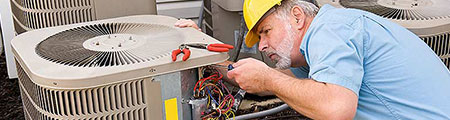
How To Know When Emergency Furnace Services Are Needed

With the new year comes the coldest season and the chilliest temperatures of the whole year. For the next few months, furnaces around the area will be working overtime to keep families safe and comfortable through the frigid weather. With the extra loads placed on furnaces, this is the most likely time of year for them to experience trouble. 

Knowing to call for help with a broken furnace is a crucial decision for any homeowner to make. Not having a reliable furnace repair contractor or trying to avoid the high costs of emergency service can leave people out in the cold. Homeowners should take the time to research furnace contractors they could call during an emergency. 

No Heat on a Cold Night

The most obvious symptom that can send a homeowner to the phone to call for an emergency furnace visit is a lack of heat overnight. Spending a night without heat and waking up to a cold morning counts as an emergency. Not only is the comfort of a home's occupants at stake, but the safety of the home is also affected. 

Modern homes are designed under the assumption that they will be protected from freezing temperatures. When temperatures inside the home are allowed to drop, pipes can be in danger of freezing and bursting. If a homeowner notices that the furnace isn't able to keep up during the night or isn't heating altogether, they should call for emergency furnace repairs. 

Loud Noises

noises

Furnaces and heaters should run with very little noise. Apart from the hum of a blower and the flame's sound in the burner, a furnace should operate silently. Any time other noises are heard, it is likely an indicator that something is wrong with the system. 

Noises that can be heard coming from a heater can include:

  • Screeching: An indication that a belt is loose and will need to be tightened or replaced
  • Grinding: Bearings are dry and worn out from lack of maintenance
  • Knocking: Burners may be dirty, causing inconsistent flame leading to lower efficiency
  • Ticking: Coming from ducts that are expanding due to heat. Homeowners should check insulation periodically to make sure it is intact. 

Gas Odors

Natural gas is the primary fuel source for many different types of heating. Most people cook food, heat their water and their home with it. With all of the benefits that gas provides, it also presents a hazard around the home. Due to its usefulness, it is flammable and explosive. While natural gas is odorless, special chemicals are added to it to make it perceptible to humans. The chemical is a sulfur compound that smells potently of rotten eggs. 

bad smell

When homeowners smell gas, they should not take chances. They should extinguish all flames, vacate the area immediately, and call for help. Gas leaks can accumulate in an enclosed space, such as around furnaces in the home, and ignite. 

About Atlantic Heating & Air Conditioning

Atlantic Heating & Air Conditioning has been serving Boston, MA since 1962. Their commitment to excellence means homeowners get the best service for their price. Their technicians are available 24-hours a day for emergency heater service

Those Noises Don't Mean Your House Is Haunted; That's Just the Boiler

woman with startled facial expression and arms outstretched reacting with alarm

What Do Different, Scary Boiler Sounds Mean?

The Halloween season can be creepy in more ways than just spooky traditions. For homeowners, fall's cooler temperatures mean that they are firing up their heating systems for the first time in months. After sitting idle for months, homeowners nervously go through start-up procedures hoping no gremlins have taken residence in their boilers over the summer. 

Often, creepy noises are the first indication that something is spooky is happening inside the boiler. No. It's probably not ghosts. It usually means it's time to schedule a visit for boiler service. 

Banging Noises in the Basement

men putting hands on his head

Banging noises coming from a boiler system are one of the most common noises. The banging noise can be genuinely unsettling for homeowners that are hearing it for the first time. However, the banging noises have a simple cause that can be rectified by a simple procedure. 

Banging noises in a boiler are caused by the same process that causes knocking inside a hot water tank. As water sits inside a vessel, it is common that sediment settles out into the lowest parts of the system. Coincidentally, this means that sediment and scale will build up mostly in a boiler's heat exchanger. As the boiler begins a heating cycle, heat gets trapped under the scale and causes the water to boil. The banging sound is caused by the water vapor bubbles collapsing as they escape from underneath the scale. 

To fix banging noises in a boiler, the system must be drained and refilled. Draining or flushing the system will sweep away the scale. In regions with hard water, these problems will be more common, so installing water softeners and using softened water to refill the boiler will prevent this situation in the future. 

Rattling in the Hallway

Rattling noises coming from a boiler can sound like things going bump in the night, but it's usually just an indicator that something is loose. Rattling noises aren't necessarily located right in the boiler tank; sometimes, they occur along the piping or at radiators or baseboards heaters. 

To stop noises caused by rattling, check all valves, covers, and piping for security. Sometimes the fix is as simple as tightening a pipe that has loosened its clips. If this doesn't fix the problem, call a professional. Rattling can sometimes indicate the need for a system to be bled and pressurized

Humming in the Attic

Humming can sound like the screams of a banshee in the night, but usually, it's just an indicator that flow is too high in a boiler system. In any plumbing system, humming noises indicate turbulent water flow. Turbulent flow is expected in incoming cold water lines since colder water is denser and more highly pressurized. 

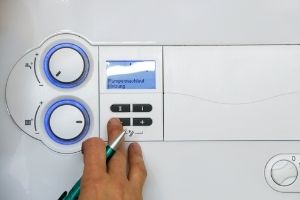
thermostat

To fix humming noises, have a professional check the water pressure in a boiler. Pressure regulators can go bad and allow high pressure into a plumbing system. All that needs to happen is to have the regulator turned down. If this doesn't fix the problem, pumps might be turned to high within the boiler system, causing a turbulent flow. Turning down throttling valves can easily fix this. Kettling, another sign of boiler malfunction, should be looked at with the same care.

About Atlantic Heating & Air Conditioning 

Atlantic Heating & Air Conditioning have been serving customers since 1962. They offer a full line of heating, cooling, and air quality services. Custom-tailored solutions and service are what have kept their customers coming back for nearly 60 years. Contact them today for reliable boiler services in Boston, MA!